YERUN (Young European Research Universities Network) has consistently advocated for a stronger, more integrated and operational European Research Area (ERA) as a key enabler of Europe’s competitiveness, efficiency and innovation capacity. In response to the adoption of the ERA Policy Agenda 2025-2027 and the Competitiveness Council Conclusions, we have stressed the importance of translating shared ERA values into practical, enforceable commitments. Our members believe in the transformative potential of the ERA as a single market for knowledge and talent, underpinned by cooperation, inclusiveness and academic freedom.
However, the progress made under previous ERA agendas has too often been uneven and fragmented. While voluntary coordination mechanisms have enabled positive developments, the persistent structural barriers, which range from mobility restrictions and fragmented funding landscapes to unequal recognition of qualifications and precarious research careers, continue limiting ERA’s potential. That is why YERUN sees the proposed ERA Act as a vital next step. It is the instrument that can elevate the ERA from political aspiration to legal reality through codifying common standards, ensuring consistent application and supporting the realisation of the EU’s “fifth freedom”: the free movement of knowledge, research and innovation.
For young research universities, this matters profoundly. These institutions are agile, collaborative and deeply embedded in their regional ecosystems. They are crucial actors in talent development, open science and early-stage innovation – but they depend on enabling framework conditions at the European level to fully realise their potential. The ERA Act must be the tool that removes persistent barriers, aligns investments and protects the fundamental values that underpin a vibrant and inclusive R&I system.
In response to the call for evidence launched by the European Commission (EC) on 6 August, we outline concrete policy areas where the ERA Act can and should make a difference.
Policy Priorities and Recommendations for the ERA Act
1. Unlocking the Fifth Freedom with Binding Commitments
- Ensure the free movement of knowledge, researchers and technology as a legally binding objective of the EU.
- Reduce national fragmentation through a more streamlined mutual recognition of qualifications, aligned funding rules, and interoperable infrastructures.
- Include enforceable provisions for Member States (MS) to progressively meet the 3% GDP target for R&D investment and continue working towards incentives and mechanisms that would foster larger investments in the future.
2. Enabling Talent Circulation and Research Careers
- Promote the implementation of the recommendations included in the EU framework for research careers, ensuring opportunities for research institutions to implement the measures and adequate collaboration and coordination between institutions of different sectors across Europe.
- Establish an EU Researcher Visa for third-country nationals with accelerated processing and multi-country mobility rights.
- Streamline social security provisions and reduce administrative burden for short-term exchanges.
- Improve recognition of prior experience (including outside academia) and remove indirect employment barriers to non-national researchers (e.g., language requirements).
- Align institutional evaluation systems with CoARA principles to recognise diverse outputs.
- Propose a minimum-standard contract template for researchers (working in academia and research institutions), adaptable to national contexts, but ensuring a minimum standard level of protection and conditions.
3. Advancing Open Science and Research Infrastructures
- Ensure that open science mandates are backed by predictable, long-term funding and technical and implementation support. Open Science policies are widely available at institutions. What often lacks are the resources dedicated to their implementation and a more thorough focus on FAIR data progress.
- Promote diamond open access models, shared repositories and network-level publishing platforms.
- Strengthen the ERIC instrument and ESFRI coordination, including for medium-scale infrastructures.
- Improve GDPR guidance for research with human data and promote national templates for Data Transfer Agreements.
4. Protecting Scientific Freedom and Institutional Autonomy
Academic freedom is a cornerstone of the ERA and a prerequisite for excellence, trust and innovation in research. YERUN welcomes the ERA Act as an opportunity to elevate the protection of scientific freedom from principle to practice. The Act should embed this value legally across MS, drawing on best practices such as constitutional guarantees (e.g. Germany, Spain) and integrating academic freedom as a structural enabler of Europe’s knowledge system.
While YERUN members largely report a positive state of academic freedom in their own institutions, they are increasingly aware of its fragility, particularly in light of shifting political narratives, funding constraints and security-driven restrictions on international collaboration. National guidelines on knowledge security (e.g., in the Netherlands) and political pressure on certain disciplines (e.g., gender studies) show how quickly academic freedom can be compromised. The ERA Act should therefore offer a harmonised approach to safeguarding academic freedom, accompanied by flexible implementation tools, clear monitoring mechanisms and transparent decision-making processes for collaboration in sensitive areas.
Concrete legislative safeguards are needed to ensure that researchers can pursue independent and sometimes controversial work without fear of interference, funding penalties or personal threats. These should include:
- Embedding academic freedom and institutional autonomy in EU law, with concrete guidance on implementation.
- Transparent frameworks for risk management in international research collaboration, ensuring proportionality and academic-led decision-making.
- Minimum support standards for researchers facing threats, such as national safety coordinators, reporting protocols and shared European resources.
- Recognition of the role of civil society in protecting research independence from undue private or commercial interests.
Beyond legal protection, other structural aspects related to research careers may compromise academic freedom, and thus, actions within the ERA Act would be welcomed. These include:
- Precarious employment and short-term contracts, which discourage risk-taking and controversial topics.
- Performance-based assessment systems that prioritise outputs over originality and can penalise researchers working with sensitive or non-publishable data.
- Access barriers to data and information, especially in research involving human subjects and cross-border data sharing. The Act should support EU-wide templates for Data Transfer Agreements and strengthen the enforcement of open access policies.
Finally, the increasing commodification of research has created an environment in which funding is often steered towards short-term economic priorities, sometimes at the expense of curiosity-driven inquiry. While competitiveness is important, a vibrant ERA must also safeguard the space for long-term, independent research that is not directly tied to political or commercial agendas. Achieving this depends on unlocking the Fifth Freedom with binding commitments that guarantee predictable and flexible funding, enabling talent circulation and sustainable research careers through stronger institutional capacity and support, and advancing open science and research infrastructures with evaluation systems aligned to the principles of responsible research assessment, such as those promoted by CoARA.
In this way, the ERA Act can provide more than regulatory safeguards: it can create the structural framework in which excellence and innovation thrive. Therefore, protecting academic freedom is not only about defending rights, but also about ensuring that Europe’s research system remains open, diverse and resilient. With ambition, clarity and enforceability, the ERA Act has the potential to anchor academic freedom at the very core of the European knowledge system, securing Europe’s place as a global leader in scientific integrity and creativity.
Conclusion: A Stronger ERA for All
The ERA Act is a unique opportunity to provide a legal foundation for the European Research Area that is coherent, future-proof and inclusive. YERUN requests that the EC and MS use this opportunity to remove longstanding barriers, enable mobility and cooperation, and enshrine the values that sustain academic excellence. Young universities stand ready to co-shape and implement an ERA that works for all actors, and for the generations of researchers and innovators to come.
.
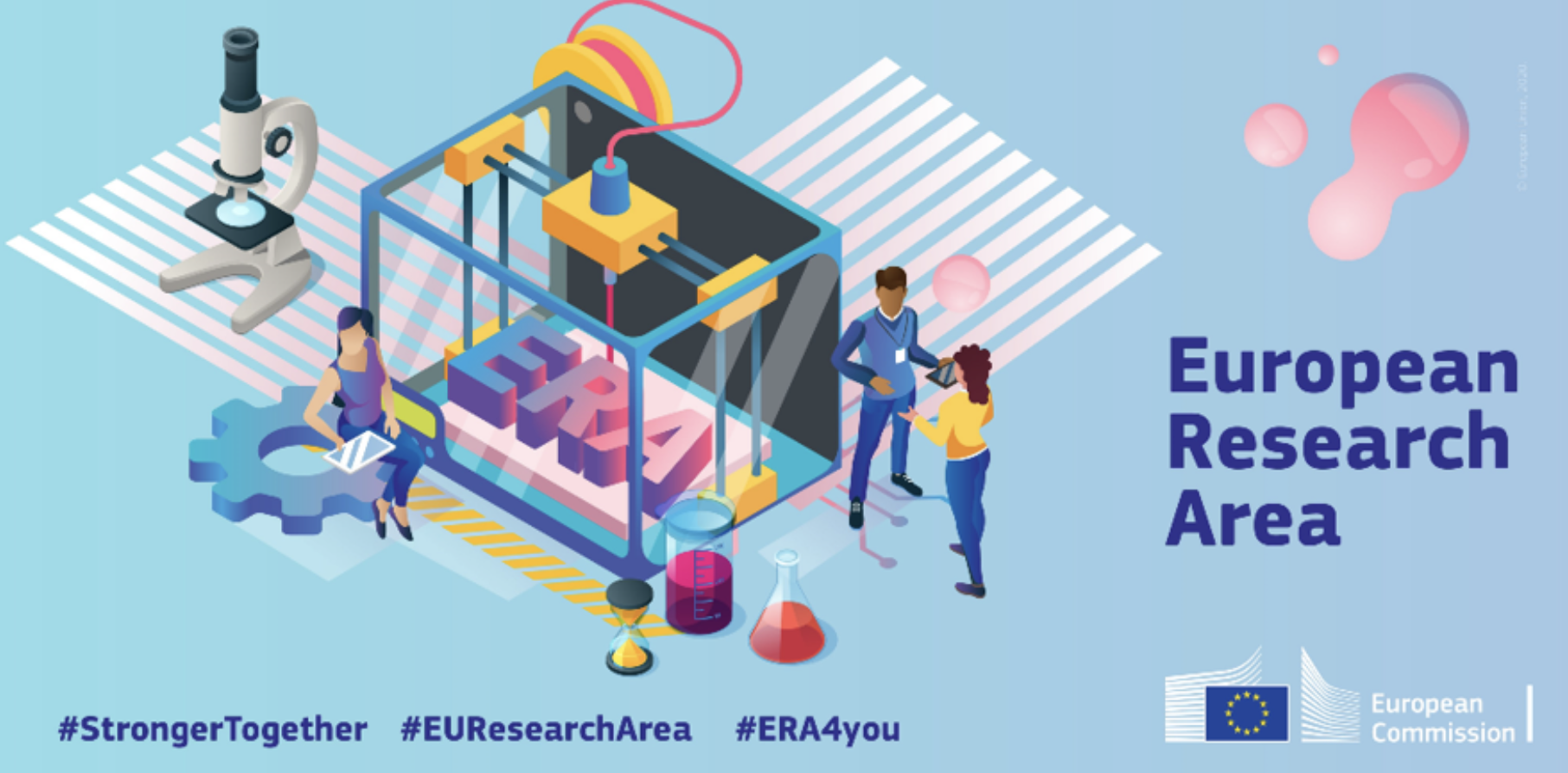
Photocredit: © European Commission