Brussels, 9 September 2026 — Preparations for the EU’s next long-term budget have entered a decisive phase, and with them come choices about where Europe invests for the future.
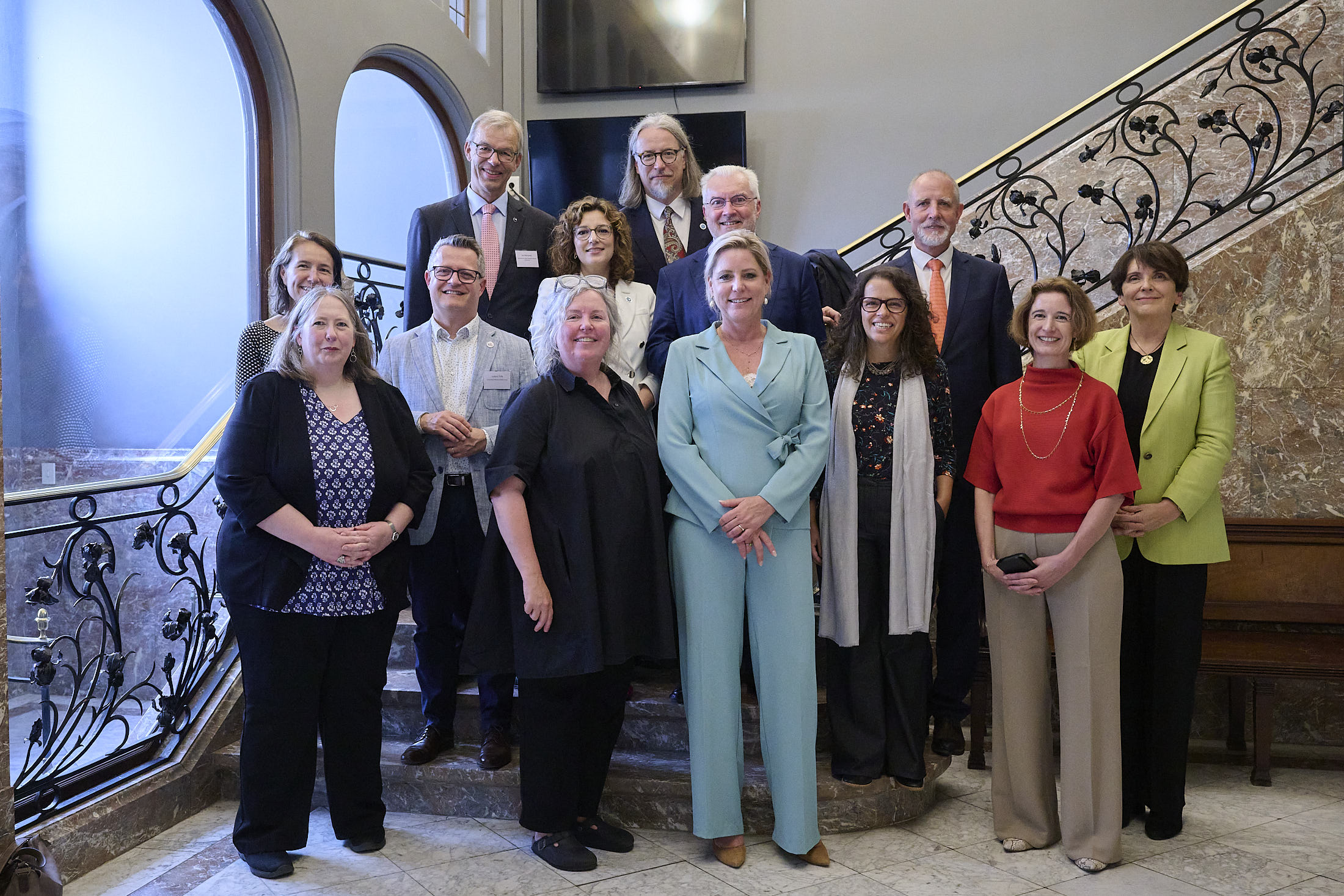
In a joint statement published today ahead of today’s event “Investing in what makes Europe strong”, YERUN, CESAER, the Coimbra Group, the EUA, EU-LIFE, The Guild, and LERU argue that research and innovation are a critical strategic investment, and that the decisions taken in the coming months will shape Europe’s capacity to generate breakthrough discoveries, drive social progress and build the foundations of its long-term prosperity, resilience and competitiveness.
The statement points to Horizon Europe as the EU’s flagship instrument for making that investment. By funding frontier and collaborative research, research careers and research infrastructures, it supports work that no Member State can deliver alone.
R&I is not a cost to be contained, we signatories say, but investments in the knowledge, talent and technologies on which Europe’s future strength depends. We urge policy makers to translate Europe’s ambitions into the resources needed to compete globally.
The next EU budget is a statement about Europe’s ambitions for itself. We are asking policy makers to treat research and innovation as the strategic investment they are, and to give Europe the means to compete, to innovate and to shape its own future. As highlighted by Craig Barret (former CEO of Intel) you can’t save your way out of recession – you have to invest your way out”. Prof. Dag Rune Olse, YERUN President and Rector of UiT – The Arctic University of Norway.
As the budget negotiations progress, Member States and the European Parliament must:
1. Match Europe’s ambitions with at least €200 billion for Horizon Europe
Horizon Europe needs a budget matching what Europe expects of it, and tight public finances make prioritising research more important, not less. The Commission’s proposed €175 billion is already too low and should be raised to at least €200 billion, as the European Parliament has proposed.
2. Guarantee budget certainty for Horizon Europe
Excellent research depends on stable, predictable funding, since universities, research institutes and innovative businesses plan investments, recruit and build collaborations over many years. The Horizon Europe envelope should therefore be a minimum commitment rather than an indicative allocation, with at least 12% committed annually and new priorities funded from additional resources.
3. Ensure a balanced investment across the research and innovation continuum
How the budget is distributed matters as much as its size. Horizon Europe should protect lower and medium technology readiness levels, where private investment rarely steps in, and leave deployment and scale-up to other instruments such as the European Competitiveness Fund.
4. Agree an ambitious EU budget in time for Horizon Europe to start in January 2028
For the EU to be ambitious, a predictable budget is needed. Negotiations should conclude in time for the first calls to launch on 1 January 2028; delays would leave applicants uncertain and interrupt collaboration. New “own resources” are welcome, but revenue that may come later cannot justify a smaller Horizon Europe now.
5. Invest in research and innovation at both European and national levels
National investment is the foundation of European research and innovation, and Horizon Europe builds on it. An ambitious Horizon Europe budget must therefore be accompanied by swift progress towards investment of at least 3% of GDP in the sector, including the target of 1.25% of EU GDP in public effort, to be reached by each Member State by 2030.
The full joist statement is available here
Young universities know how much depends on stable, predictable and sustained funding for research. This is where academic careers take shape and new discoveries are made. An ambitious Horizon Europe must go hand in hand with strong national investment to ensure that research capacity grows across the whole of Europe. Adam Kola, YERUN Vice-President and Vice-Rector for Research at Nicolaus Copernicus University in Toruń
The signatories
- CESAER — https://www.cesaer.org/
- Coimbra Group — https://www.coimbra-group.eu/
- EUA — https://www.eua.eu/
- EU-LIFE — https://eu-life.eu/
- The Guild — https://www.the-guild.eu/
- LERU — https://www.leru.org/
- YERUN — https://yerun.eu/