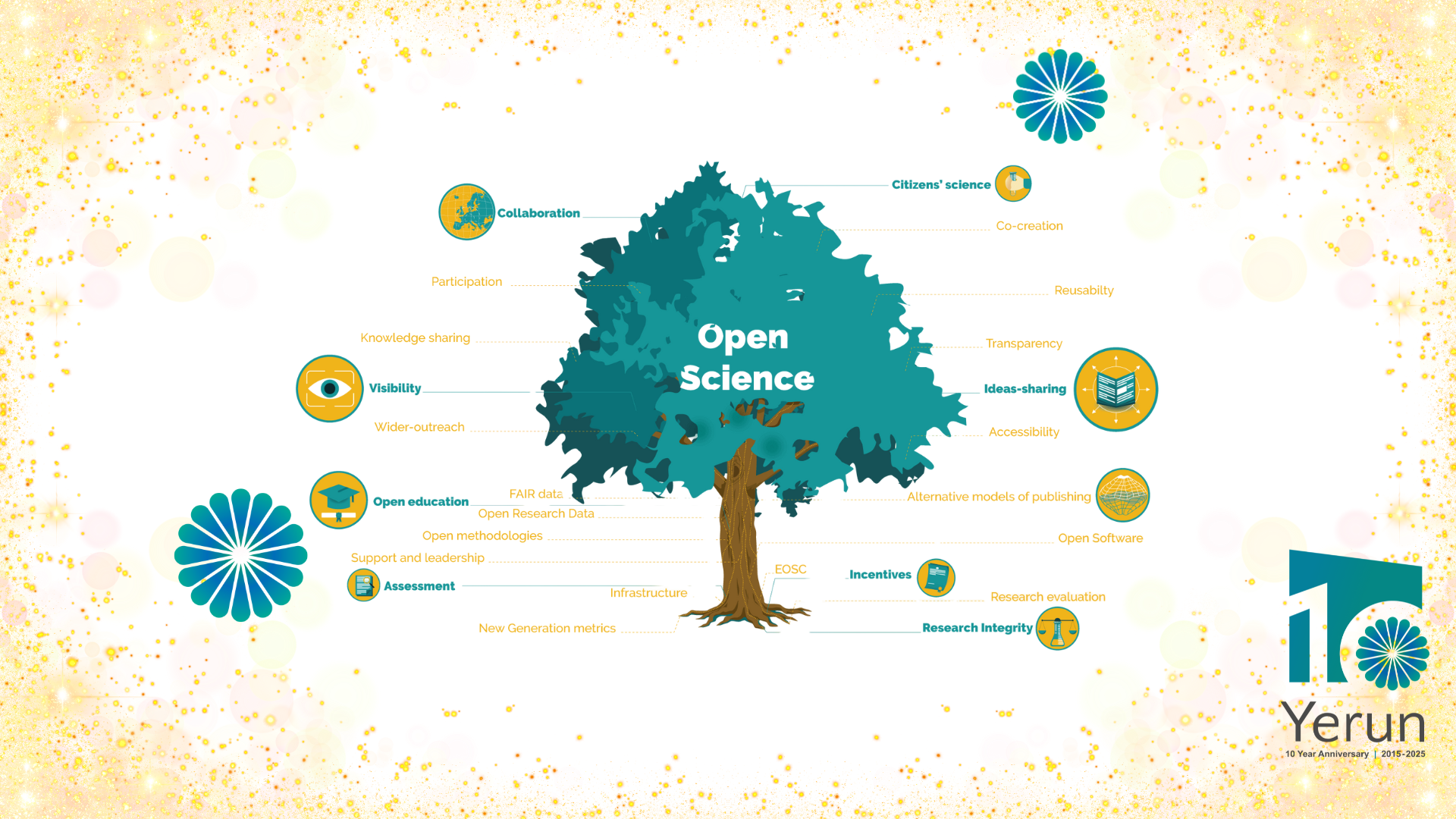
At YERUN, openness has become part of how young universities do research, teach and collaborate. Open science is no longer only about meeting requirements: it is about making knowledge easier to find, to reuse and to trust.
In October, as we celebrate both International Open Access Week and YERUN’s own Open Science month, we focus on how our members are navigating a fast-moving space where artificial intelligence, research integrity, data policies and inclusion come together.
This edition of SPARKS shows what that looks like in practice: a YERUN webinar that turned policy into concrete steps for researchers and support staff, contributions from universities that are opening up their labs, libraries and local communities, the role of OPUS in linking open science to research assessment, and, to close the year, an “Open Science Advent” that shares tools and inspiration in an accessible format. Together, these stories show that when openness is supported, recognised and shared, it becomes the normal way of working in our universities.
Open Science in October: AI, ethics and inclusion
On 21 October, YERUN hosted the webinar “Artificial Intelligence in Open Science” during International Open Access Week. With speakers Ana Meštrović, full Professor at the Faculty of Informatics and Digital Technologies, University of Rijeka; Gerasimos (Jerry) Spanakis, Assistant Professor in Machine Learning and Natural Language Processing at Maastricht University; Lars Ailo Bongo, Professor in Health Technology at the Department of Computer Science, UiT – The Arctic University of Norway; and Iva Melinščak Zlodi, Librarian at the Faculty of Humanities and Social Sciences, University of Zagreb, the discussion moved quickly from abstract principles to concrete university practice. They showed how AI is already shaping openness, transparency and integrity in research and teaching, and how open science can, in turn, make AI fairer, more diverse and more trustworthy.
The speakers made a clear contrast. Open science is a mature reform movement rooted in ethical principles like accessibility, inclusion and transparency. AI, by contrast, is a fast-moving technological force that now touches every stage of the research cycle. For that reason, we can’t just accept or reject AI. We have to guide it with open licences, clear terms of use and transparent models. Throughout the webinar, libraries appeared as key actors, ensuring that repositories, metadata and multilingual access actually make research findable and verifiable.
A recurring concern was language and cultural diversity. AI-assisted writing risks pushing research into one tone and one language, which would weaken Europe’s plurality. Open science practices, especially good metadata, multilingual interfaces and open training materials, can counter that, provided universities take inclusion seriously, also for smaller and indigenous communities. The speakers therefore called for a cultural shift in universities: researchers should see AI as a collaborator, but one that must operate within open and ethical guardrails. Used this way, AI and open science can reinforce each other and help universities build more transparent, equitable research environments.
You can watch the full webinar here: https://www.youtube.com/watch?v=InBmR0sYB_E
Open science across YERUN universities
Fostering Open Science at Maastricht University

Maastricht University (UM) endorses the principles of Open Science, offering its academics support to put these principles into practice and make science “as open as possible, as closed as necessary”. Through the UM Library, the Open Science Community Maastricht (OSCM) and the UM Open Science policy, UM promotes transparency, collaboration and societal impact. Key themes include advancing Open Access publishing and implementing FAIR principles for data and software. Other important themes include citizen science, Open Educational Resources (OER) and preregistration to increase transparency and reproducibility. Another vital aspect of UM’s Open Science mission is fostering a culture of recognition and rewards that values quality, openness, and a diversity of contributions, from research and education to leadership, collaboration, and engagement. This commitment was also reflected in UM’s hosting of the 2024 National Open Science Festival. The festival brought together researchers, students and policymakers to exchange ideas and strengthen a culture of openness.
Open Science at UEF – action plan and annual awards
The University of Eastern Finland has adopted an open science and research action plan for 2025-2030. As part of this commitment, the university will begin implementing Rights Retention (RRS) policies on 1st January 2026. Preparations are currently underway to finalise key guidelines and some details before launching the initiative to the wider community. The university is also planning to apply CC BY license to the university publication series, thereby promoting broader accessibility and reuse. In addition, the university is finalising the requirements for a new system to support handling of open educational resources.
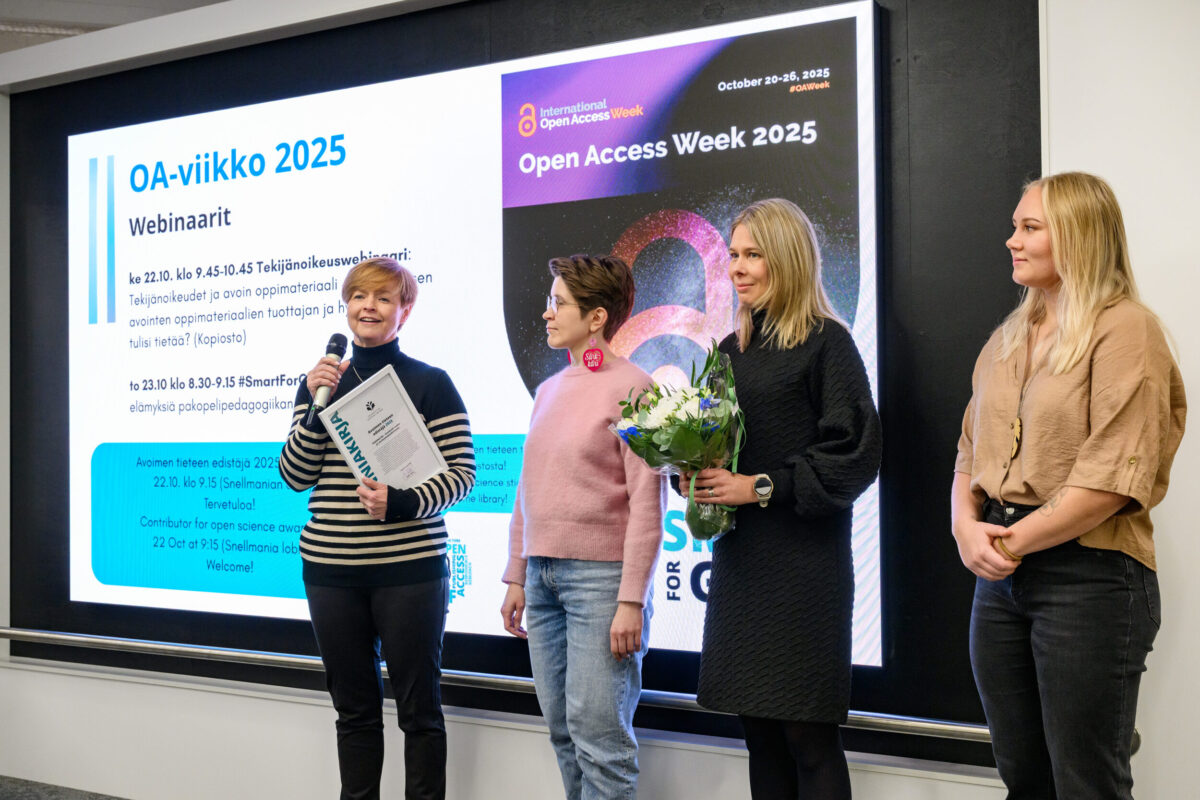
Each year, during the international Open Access Week, UEF presents an internal award recognising individuals or units for their contribution to open science and open access. This year’s award was given to the FOODNUTRI – Climate Smart Food and Nutrition Research Infrastructure project, represented by Professor Marjukka Kolehmainen, Doctoral Researcher Kirsikka Aittola, University Lecturer Maria Lankinen and Doctoral Researcher Moona Partanen, who accepted the award on the Kuopio Campus on 22 October 2025.
University of Potsdam: Openness through Collaboration
The project Co-WOERK connects universities in Brandenburg and Mecklenburg-Vorpommern to foster a vibrant community of practice around Open Educational Resources (OER). By linking educators, researchers, and institutions, Co-WOERK promotes a culture of openness that extends beyond sharing materials — towards collaboration, co-creation, and sustainable knowledge exchange.
Brandenburg’s eight state funded institutions of higher education collaborate in FDM-BB to foster an academic culture with strong research data management (RDM) and FAIR/Open data principles at its core. The initiative opened a new chapter with new digital services for managing and publishing research data and a permanent competence center to ensure lasting and sustainable collaboration.
A new collaboration model at the University of Potsdam between central and decentralized IT was created to launch electronic lab notebooks (ELNs) – digital versions of traditional paper lab notebooks used by researchers to document experiments, observations, and results. This has led to valuable synergies and long-term benefits for the University and the free and open source ELN community, fostering both, open methods and open infrastructure.
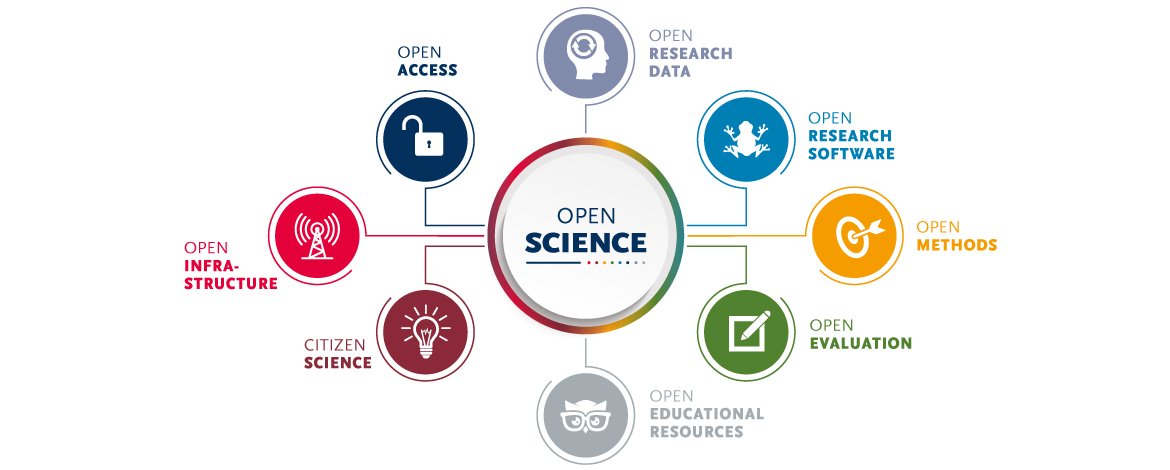
Learn more about Open Science at the University of Potsdam at https://www.uni-potsdam.de/en/openscience/
NOVA University Lisbon: Co-creating a Research Data Management Policy
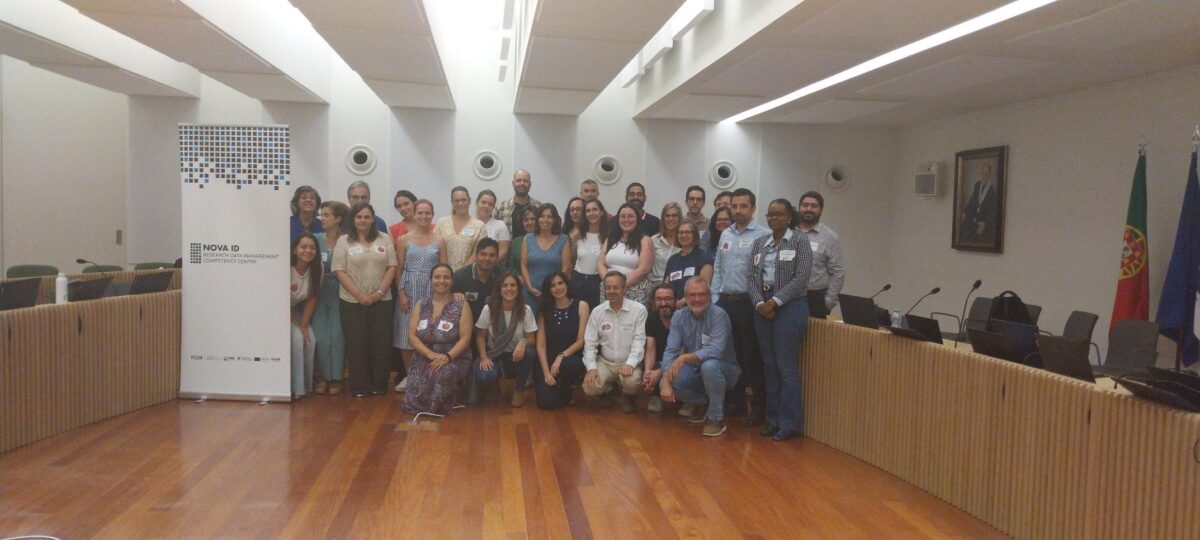
In 2025, Portugal marked the establishment of 14 Research Data Management Competence Centres, among them the NOVA.ID-RDM-CC from NOVA University Lisbon, dedicated to enhancing the quality, integrity, and visibility of research data through structured management strategies, training, and robust digital infrastructures. The NOVA.ID-RDM-CC has been developing an institutional Research Data Management (RDM) Policy through a co-creation process that brings together researchers, librarians, IT specialists, data stewards, and research managers. This participatory and interdisciplinary process unfolded in successive stages, including benchmarking, internal surveys, and policy drafting, culminating in an open discussion workshop where participants analysed the draft policy and performed a SWOT analysis. The insights gathered from this collaborative exercise were incorporated into the final version of the policy, ensuring alignment with institutional and national frameworks. The resulting document will now be submitted for formal approval by NOVA University’s College of Deans, reinforcing shared responsibility in RDM governance.
Boosting Open Science practices at UNIRI
Fostering its strategic and policy frameworks, and especially researchers’ career perspectives, the University of Rijeka (UNIRI) is strongly committed to Open Science (OS) practices. Since 2010, UNIRI has been part of HRS4R, and it is distinguished by the Excellence in Research logo, a procedure that now also encompasses OS indicators. Since 2021, it has beena signatory of both DORA and CoARA, and it has a well-defined OS policy (updated and revised at the beginning of 2025). More recently, UNIRI has also participated in YERUN-related Horizon Europa (HE) project OPUS and SECURE, where, together with UNL and UCY, it has piloted OS practices encompassed in the resulting Research Career (RCF) and Researcher Assessment (RAF) Frameworks, respectively. As part of its CoARAactivities and the respective Action Plan, UNIRI and UCY are implementing the HE CoARABoost teaming project OSCAR, where UNIRI has developed CoARA Action Plan Development Guidelines. All these activities, including active participation and contribution of the UNIRI University Library, have also been reflected in the internal Guidelines for Additional HR Criteria. Furthermore, thanks to UNIRI’s involvement, they have been reflected in relevant national documents and policies.
University of Cyprus: Training Open Science Champions
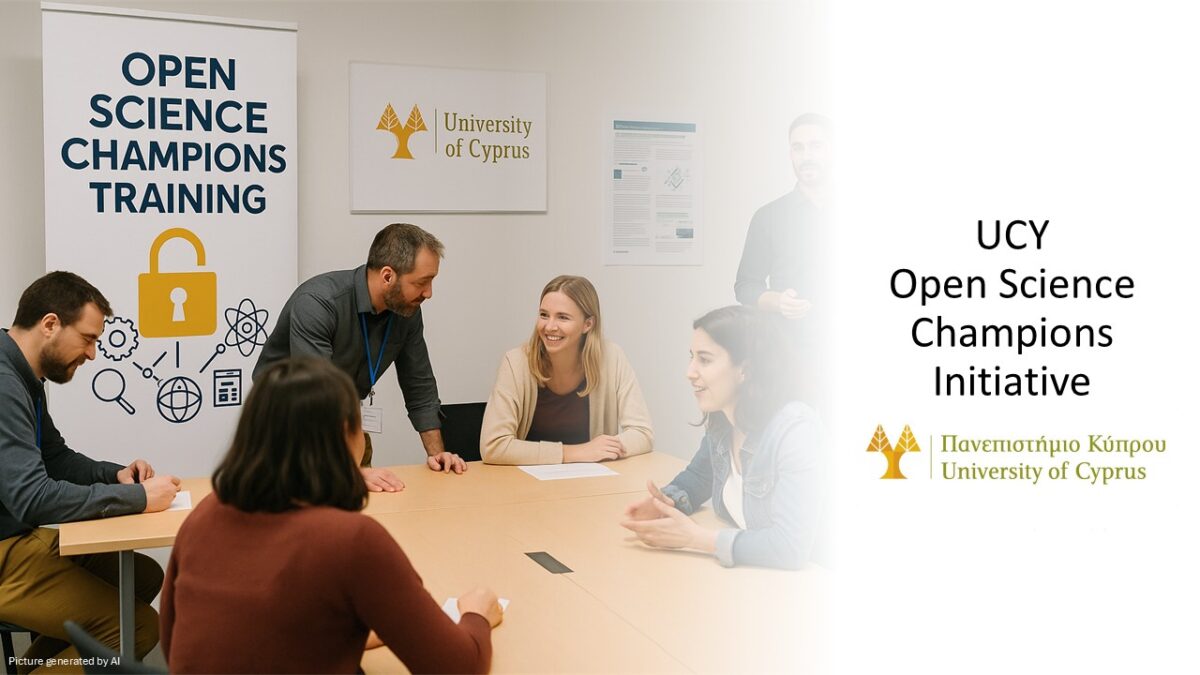
As part of the Horizon Europe OPUS Project (Open and Universal Science), the University of Cyprus (UCY) launched the Open Science Champion Initiative to nurture a community of researchers actively promoting openness, transparency, and collaboration. The initiative culminated in a two-hour interactive workshop held at the UCY Library, combining concise presentations with practical, scenario-based learning. Participants engaged in role-play simulations to practice persuasive communication and address skepticism toward Open Science. They also explored themes such as ethical data sharing, open access, and the FAIR principles. The workshop was facilitated by Sylvia Koukounidou (University Officer and Head of the Cyprus OpenAIRE National Open Access Desk) and Panos Moiras (a senior UCY research and project manager), and featured UCY’s Open Science Champions, Irina Ciornei and Georgios Stavrinides, from the KIOS Research and Innovation Center of Excellence. By training ambassadors of openness, UCY strengthens its institutional commitment to embedding Open Science practices across research and education.
University of Bremen and AWI Rescue Valuable U.S. Scientific Database
Working together, the University of Bremen and Alfred Wegener Institute, Helmholtz Centre for Polar and Marine Research (AWI) have used their data platform PANGAEA to begin creating backups of U.S. scientific datasets. The impetus for this are threats of budget cuts under the administration of U.S. President Donald Trump, which could result in the loss of valuable climate and environmental data.
For now, the collaboration with the U.S. National Oceanic and Atmospheric Administration (NOAA) is concentrating on historical data sets pertaining to earthquakes and hot springs. Among these are the Seismicity Catalog Collection (2150 B.C. to 1996 A.D.) and the United States Earthquake Intensity Database (1638 to 1985).
Further information: https://www.uni-bremen.de/en/university/university-communication-and-marketing/press-releases/detail-view/uni-bremen-und-awi-retten-wertvolle-wissenschaftliche-us-datenbanken
A gateway to Open Science at NCU
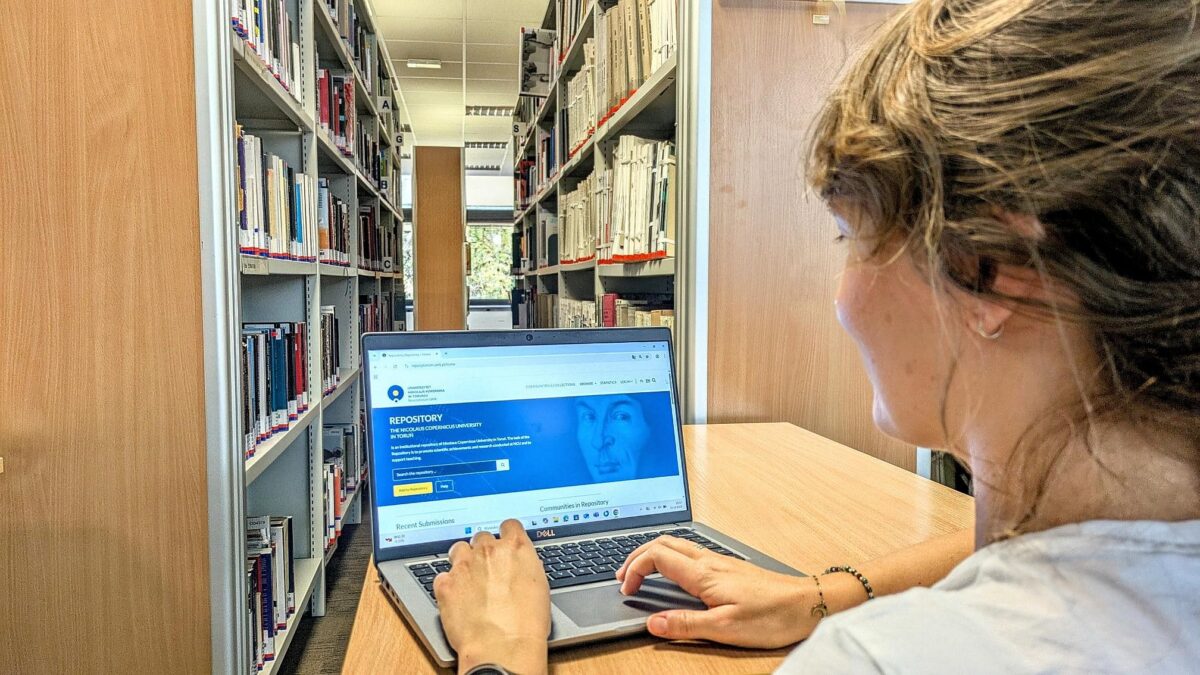
At Nicolaus Copernicus University in Toruń, Open Science principles are actively supported through the institutional Repository, established in 2012. The platform enables researchers, doctoral candidates, and affiliated authors to self-deposit their publications and research outputs, ensuring broad and open access to knowledge. Operated on DSpace 8.1, the repository currently hosts 6,977 items and receives about 2,000 monthly views. Although depositing is voluntary, NCU’s Open Access Policy encourages all researchers to make their work publicly available under Creative Commons licences. By ensuring proper metadata, long-term preservation, and discoverability through indexing services such as Google Scholar, the repository enhances the visibility and impact of research. Beyond that it also strengthentransparency, collaboration, and long-term preservation of scholarly work – key values at the core of NCU’s commitment to Open Science.
UiT launches its Diamond Open Access programme
From 2025, UiT will introduce a support programme for Diamond Open Access. According to UiT The Arctic University of Norway, this could have a democratising effect on both reading and knowledge production.
UiT The Arctic University of Norway has, for several years, worked systematically to ensure that researchers can both publish and access research articles through open access channels. At the same time, UiT, like many other universities, must allocate significant sums each year to pay for access to commercial journals and literature databases. In recent years, efforts have been made to shift payments from access to reading towards open access publishing in commercial journals. Such expenses fall under the umbrella term APCs (“Article Processing Charges”), which are linked to national consortium agreements with major publishers (“Publish and Read”, PAR agreements).
How can APC-related expenses be reduced, phased out, and redirected towards the operation of open access publishing channels? UiT believes this can be achieved through Diamond Open Access. This is seen as a much better alternative, both in terms of socio-economic benefits and because the model allows for greater academic freedom. With the diamond model, no payment is required from either the reader or the author. An important goal of the diamond model is to democratise not only reading but also knowledge production. The model entails that publishing is scholar-led and carried out on platforms operated by the research institutions themselves. The publishing process is entirely governed by academic, rather than commercial, considerations.
As a starting point, UiT has decided to allocate at least six per cent of its budget for the purchase of academic articles to support diamond open access.
Publishing statistics show that approximately six per cent of research articles written by researchers at Norwegian universities are published in diamond journals. The resources for this publishing activity are very limited. They depend on public funding to function, says Per Pippin Aspaas, head of the Research and Publishing Support Group at UiT.
UiT is now launching its own support programme inspired by Université de Lorraine and other pioneering institutions. We are doing this to ensure that a fair share of the budget supports non-commercial, scholar-led publishing activities in journals, concludes Aspaas.
Who Owns Our Knowledge? Open Access Week at Malmö University
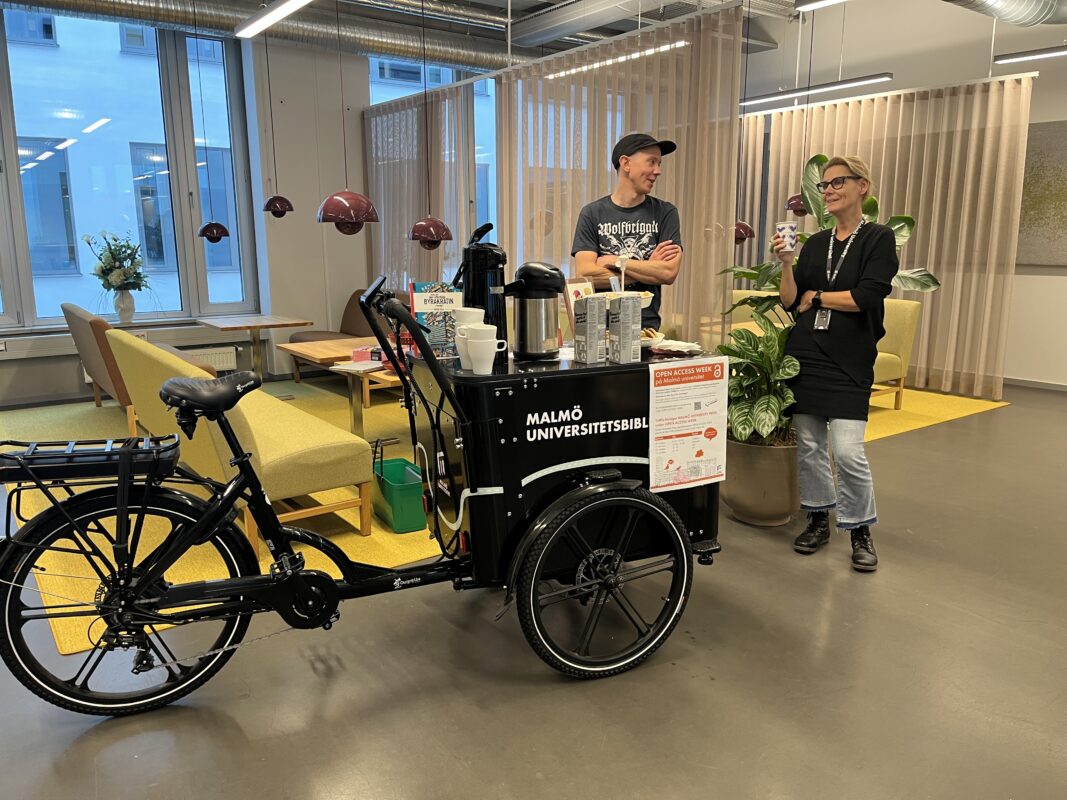
This year’s global Open Access Week explores the question “Who Owns Our Knowledge?” At Malmö University, activities will highlight two key aspects of this theme. The University Library will host open sessions to help researchers make their publications openly accessible and to discuss the development of the Open Access movement. Meanwhile, Malmö University Press, our researcher-led, diamond open access publisher, will go on a campus bike tour to meet researchers, students, and staff in their everyday spaces. Over a cup of coffee, the Press will share updates and inspire conversations about openness in research and publishing.
Videos showcase open access motivation | University of Essex
Researchers at the University of Essex have collaborated with the Library’s Research Services Team to create a new video series titled Open Access Research. Within this series of short videos, Essex authors speak about their motivations for open access publication and explain how their research has benefitted from openness. There is also a blog post explaining more about the project.

The Essex Student Journal, the University of Essex’s diamond open access journal that publishes undergraduate and Masters’ students’ work, has also had another successful year. The most recent issue is the largest yet, with 28 papers published across a range of disciplines. Catch-up on the latest student publications, all open access, including a reflective report on the second Essex Student Journal Conference.
Steps are also being taken to increase the awareness, use and creation of Open Educational Resources (OERs) at Essex. A newly created OER guide provides help and advice, including a “Code of Practice when Sharing OERs”.
Course on Fraudulent Practices in Open Science | University of Klagenfurt
The innumerable benefits that Open Science provides are undeniable. Yet, where there is light, there is also shadow. The Open Science context contains a wide range of fraudulent practices. Instances of academic misconduct or plagiarism are frequent; however, the cost model of Open Access publications also creates an environment conducive to criminal activity. Karoline Feyertag, who is responsible for the area of Open Science at the University of Klagenfurt, explains: “Disreputable publishers approach researchers and offer them Open Access publication of their work at comparatively favourable rates. These providers undermine good academic practice and trust in science.”
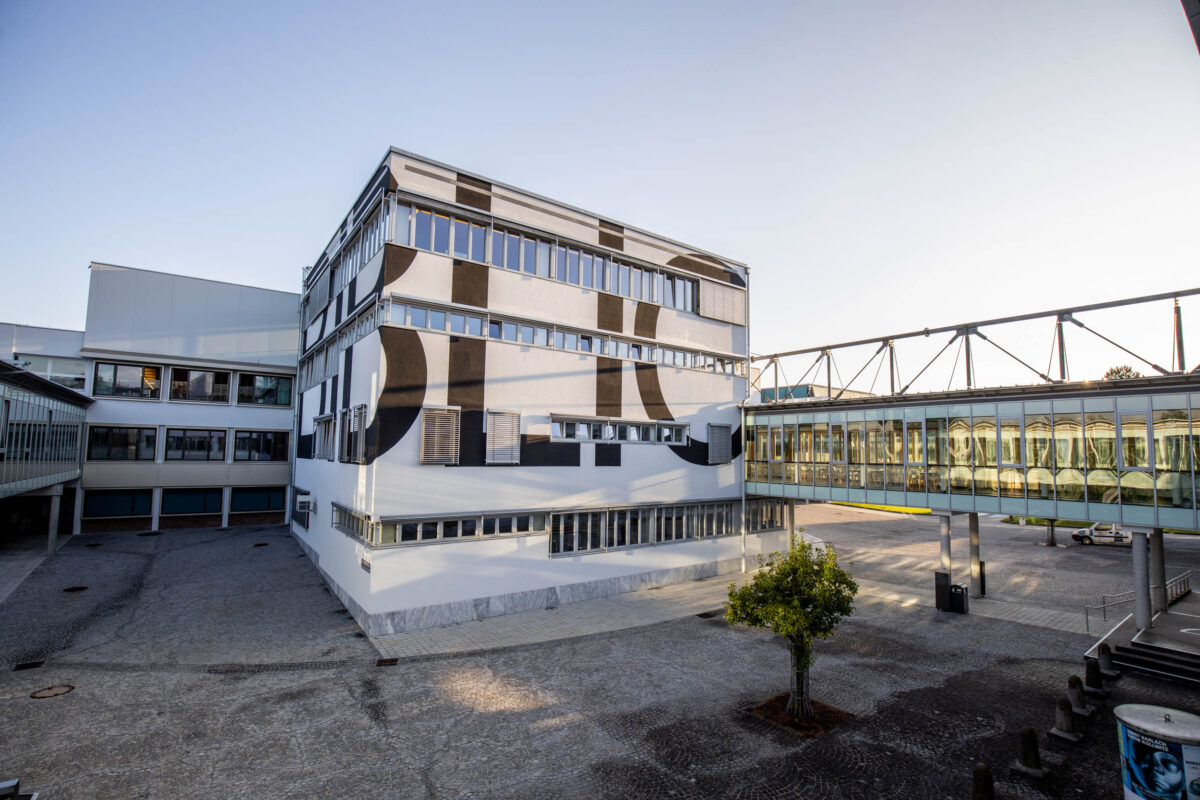
The team in Klagenfurt has a leading role in developing an online course as an outcome of the project Austrian Transition to Open Access Two that will be available as a self-learning course in German for all interested parties from 27 October.
A relaunch with English subtitles and transcripts is already in the works. The team chose a “Massive Open Online Course”, meaning that not only the content revolves around Open Science, but the blended learning format itself also meets all Open Science criteria. The self-learning course will be permanently accessible, and it will include an accompanying quiz, thereby granting participants an automated certificate.
Link to the German version of the course: Predatory Practices in the Context of the Integrity and Quality of Scientific Publications | iMooX
Open Science Spotlight | University of Konstanz
The University of Konstanz dedicates a section of its online magazine to showcasing the open science activities of its researchers and staff: the Open Science Spotlight.
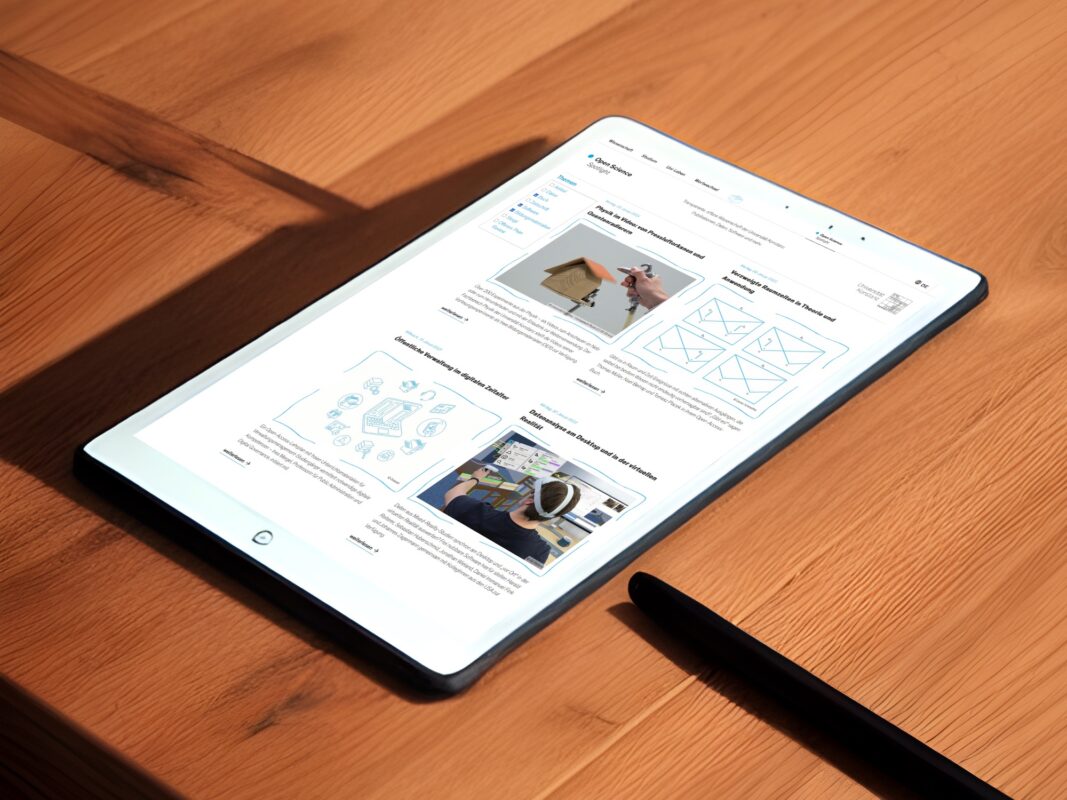
In short articles, this bilingual (English and German) format highlights open access publications, data sets, software and educational resources created by university members – all available and usable for free. Each article provides a clear introduction of the respective open science materials and direct links for easy access, so readers can dive right in without extensive searching. The Open Science Spotlight is a joint initiative of the university’s Communication, Information Media Centre and the Staff Unit Communications and Marketing. Its goal is to increase the visibility and use of open science materials beyond the campus and to inspire new collaborations between researchers, interested professionals outside academia, and the public.
Discover the Open Science Spotlight.
Opening Up Research at the University of Antwerp
The University of Antwerp recently hosted two successful events highlighting its commitment to Open Science across disciplines.
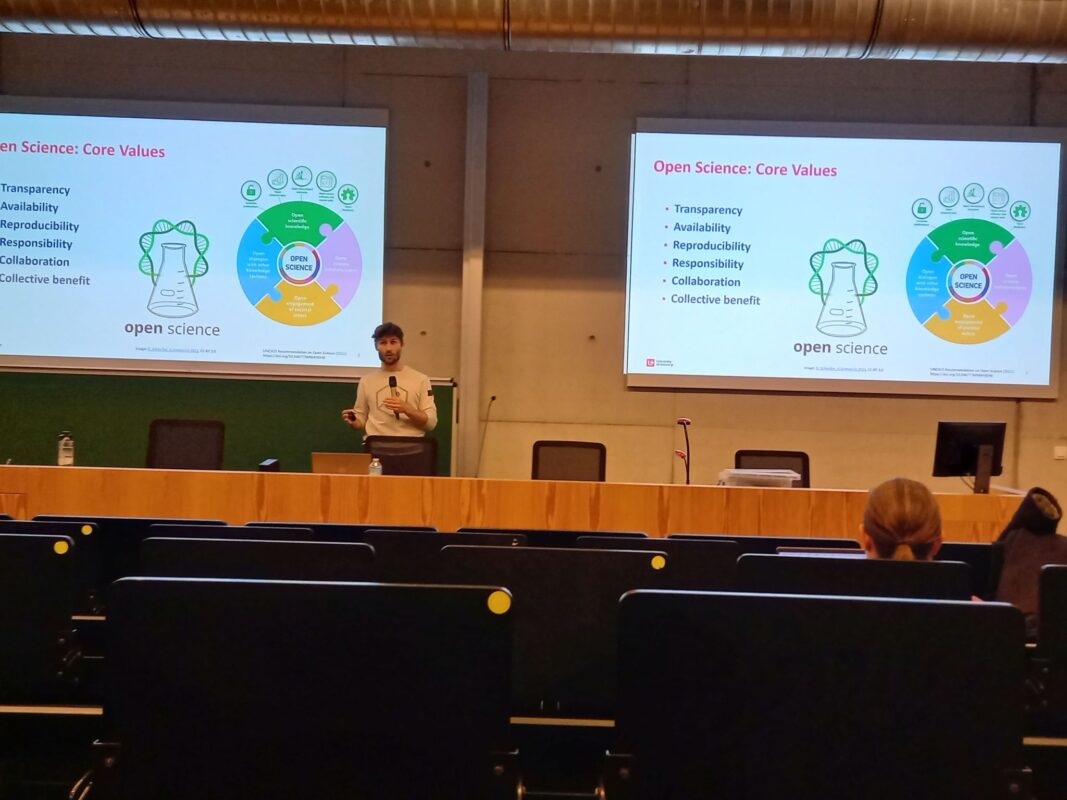
The symposium “Open Science in Qualitative Research” explored how openness can be meaningfully applied to qualitative methods. Participants discussed policy developments, funder perspectives, and ethical challenges in the morning, followed by hands-on sessions showcasing effective practices for sharing data and methods while respecting the specific nature of qualitative inquiry.
The Open Neuroscience Day focused on fostering transparency and collaboration in neuroscience. The programme included expert talks on institutional policies and reproducibility, testimonials from UAntwerp researchers, and an interactive “Open Science in Peril” quiz to engage participants in a playful way.Together, both initiatives strengthened the university’s growing open science culture, encouraging researchers to integrate openness and collaboration into their daily research practices.
At YERUN’s core: OPUS – aligning openness and assessment
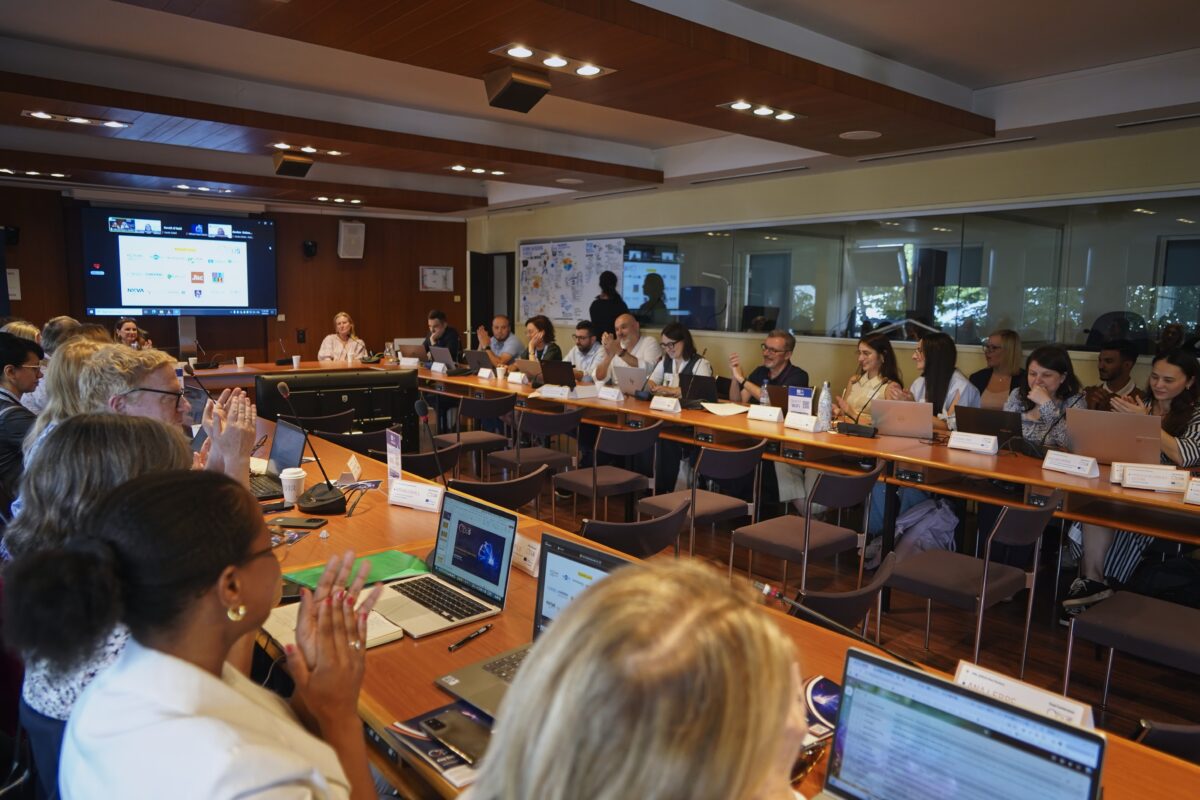
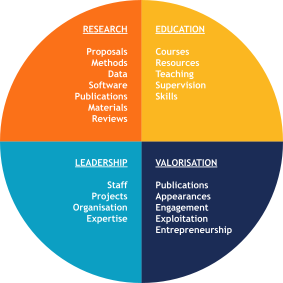
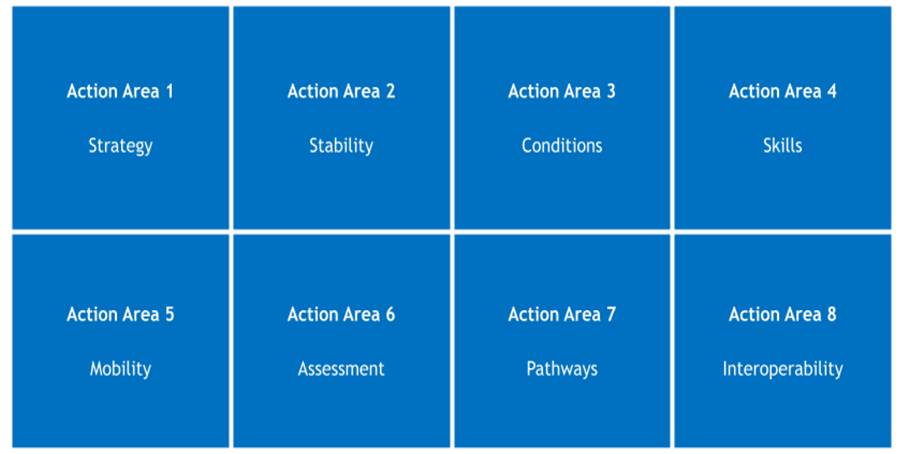
OPUS has been a project at the heart of YERUN’s work on open science and recognition and rewards. Over the past three years it has shown that universities and funders can assess researchers in a way that values openness, collaboration, data management, software, citizen science and teaching, not only journal papers. With pilot actions at YERUN members (University of Cyprus, University of Rijeka and NOVA University Lisbon), the project tested the OPUS Researcher Assessment Framework and the interventions that make it usable in real institutions. OPUS concludes this year with a clear message: open science will only take root if it is reflected in how we evaluate researchers, and if policies at institutional, national and European level point in the same direction.
Open Science Advent Calendar
And since open science is all about opening things up, we invite you to open one more thing this year: a daily Open Science Advent Calendar. It will be an interactive set of short, practical posts, one “window” at a time, with tools, policies, and good ideas from YERUN. Each one will point to something you can do or reuse right away, so the spirit of October doesn’t fade once Open Access Week is over.