Today, the European Parliament’s Committee on Industry, Research and Energy (ITRE) voted on one of the most important files for the future of the whole research and innovation (R&I) community over the next seven years. The vote on the 10th Framework Programme for Research and Innovation (FP10) and its Specific Programme comes more than a year after the European Commission’s proposal of July 2025. The text reflects several of the research community’s key requests, including a new and independent Horizon Europe, linked to but not subordinated to the European Competitiveness Fund (ECF), so that researchers can rely on a more stable and predictable framework in the years ahead.
YERUN welcomes the trust that MEPs across the political spectrum have placed in the R&I community, and its recognition of research and innovation as a cornerstone of Europe’s future.
From draft reports to the ITRE vote
In March 2026, MEP Christian Ehler and MEP René Repasi presented their draft reports on FP10 and its Specific Programme, respectively. Both reports supported the continuation of FP10 as a standalone programme with its own objectives, budget, governance and implementation arrangements, while maintaining a clear and complementary relationship with the ECF.
Over the summer, the Rapporteurs held several exchanges with the shadow rapporteurs to draft compromise amendments. After several months of internal negotiations, the agreed text was adopted today by the ITRE Committee.
Where does YERUN stand?
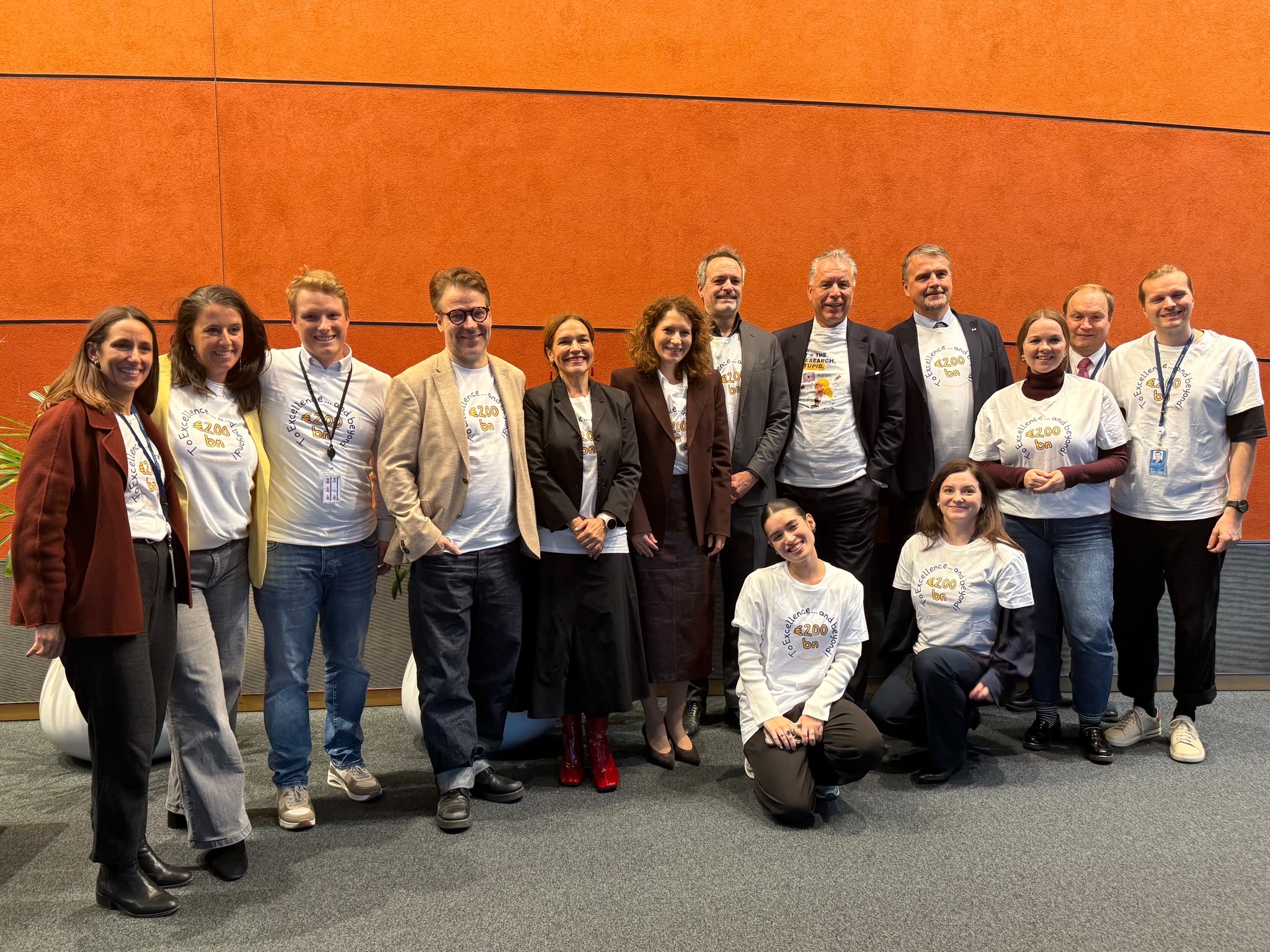
YERUN, together with the wider university community, has consistently called for a budget of at least €200 billion as an essential baseline to keep European R&I competitive at international level and to give the whole research community a stable future. The Parliament’s position is an important signal in this direction.
In particular, YERUN welcomes the proposals to:
- Keep FP10 strong and independent as the main EU instrument for excellence-based, bottom-up and collaborative research, which is key to Europe’s future success;
- Protect the ERC and reinforce the MSCA, ensuring that top-down priorities do not undermine research outcomes, as this is essential for an autonomous Europe;
- Reinforce Pillar II, while keeping the ECF focused on bringing research results to the market;
- Increase the involvement of experts and the research community in setting R&I priorities;
- Introduce the “Fast Track to Excellence” as a new opportunity to support smaller-scale, curiosity-driven collaborative projects, and an additional way to foster excellent research.
What’s next?
Trilogue negotiations between the European Parliament, the Council of the EU and the European Commission will start soon. They remain as well closely connected to the discussions on the next Multiannual Financial Framework (MFF), which are essential to ensure that the final agreement on FP10 is based on a clear and agreed budget.
The ITRE Committee also approved, by a large majority, the mandate to enter interinstitutional negotiations on both FP10 and its Specific Programme.
YERUN continues to follow the negotiations closely, through active exchanges with Members of the European Parliament, the European Commission and the Council of the EU, as well as other relevant stakeholders. Together with partner associations and the wider R&I community, YERUN has maintained a continuous dialogue with the EU institutions throughout the process.
YERUN will continue advocating for a strong, autonomous and accessible FP10 that enables Europe’s young rese
The ITRE vote marks an important step for the R&I community, but much remains to be decided. YERUN will continue to engage constructively with all three institutions as negotiations move forward, to ensure that the FP10 architecture allows universities to deliver excellence, talent, knowledge and innovation. Investing in R&I means investing in Europe’s future. Silvia Gómez Recio, YERUN Secretary General