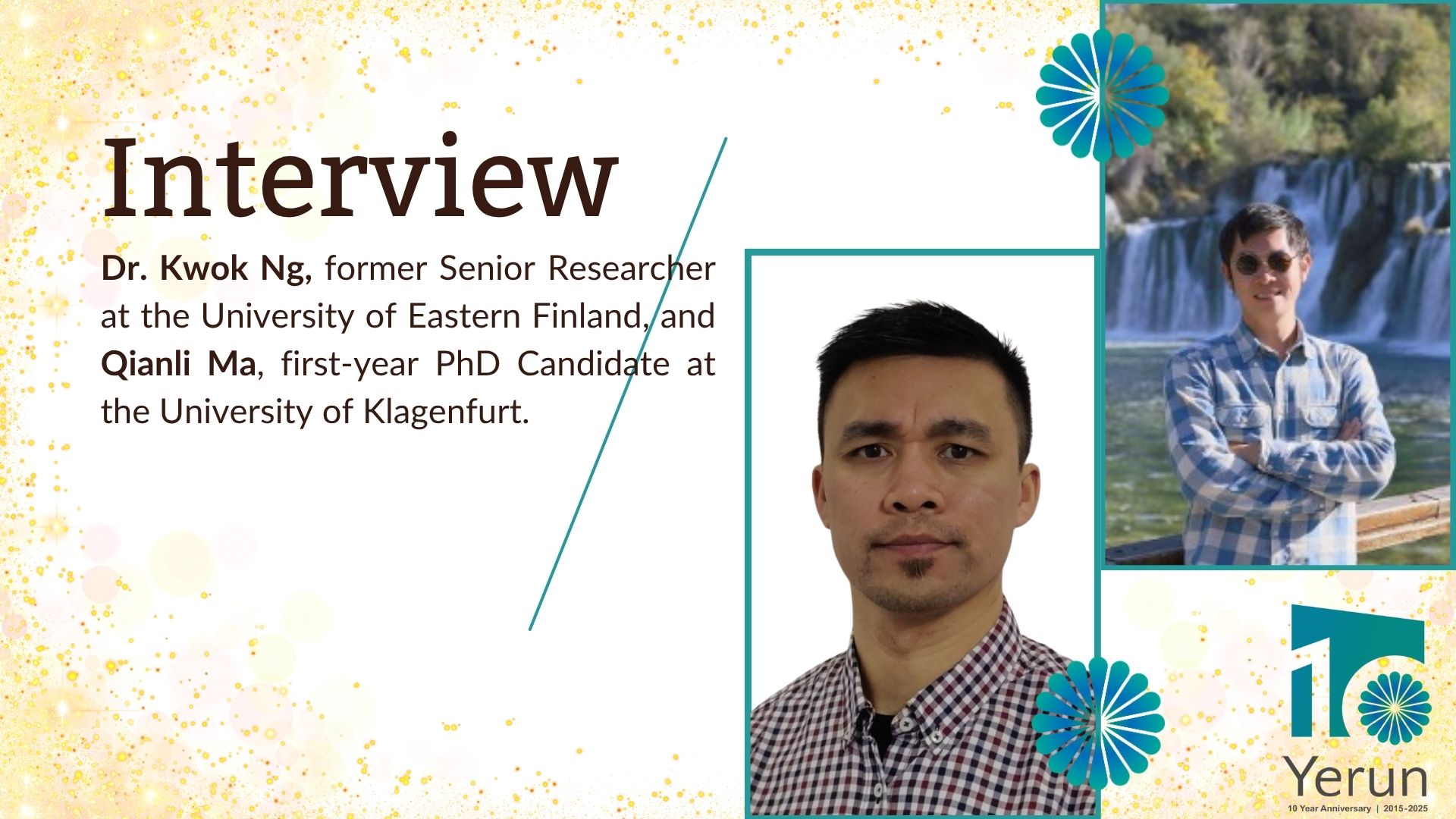
This final edition of YRMA Voices is a special one as it brings together two perspectives from different stages of the research journey: one looking back, from a past recipient whose mobility experience led to a lasting academic collaboration, and one looking ahead, from a current awardee preparing for his research collaboration.
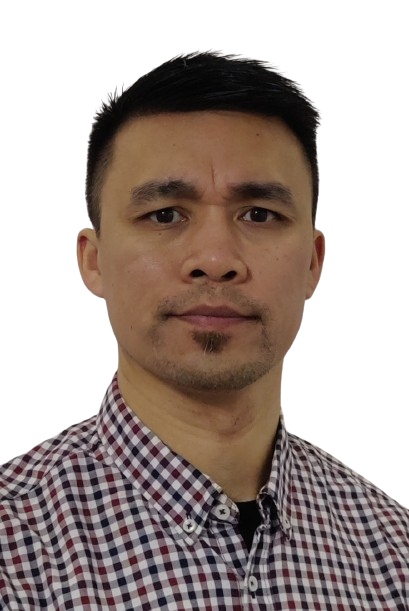
On one side, Dr. Kwok Ng, whose YERUN mobility experience fostered a lasting partnership with the University of Limerick, reflects on how an initial research visit evolved into an ongoing academic collaboration that continues still today.
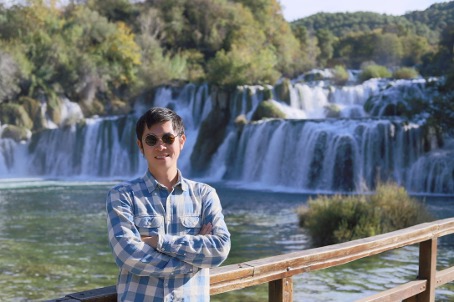
On the other, Qianli Ma, a first-year PhD candidate at the University of Klagenfurt, looks ahead to his upcoming research collaboration with Maastricht University. His voice offers a glimpse into how early-career researchers are using YERUN mobility to build networks and co-create knowledge that reaches beyond traditional academic boundaries.
Bringing these perspectives together, this edition explores the full arc of what the YERUN Research Mobility Award can offer: the beginning of new intellectual journeys, and the continuation of collaborations that outlast the mobility itself.
Below, Dr. Kwok Ng and Qianli Ma share their experiences:
What impact did the YERUN Research Mobility Award have on your research and professional development?
Dr. Kwok Ng: YERUN gave me a wonderful to explore the opportunity to visit the University of Limerick. Partnership between UEF and UL has been important to build in important research work. I was able to work directly with Professor Woods in UL to further refine my research skills and work on publications and making joint funding applications.
Did the collaboration initiated through the award lead to any ongoing partnerships or follow-up projects?
Dr. Kwok Ng: The collaboration has given me an opportunity to work with some great researchers in the physical activity for heath research centre, where I am currently a member of. I have continued to work with Professor Woods as I have since moved on from working at UEF. We have co-authored several papers together, and forged partnerships with the current research project I’m working on, despite having moved on from UEF. The opportunities that arose from the mobility, combined with shared research experience, was strategic with a bit of luck.
What advice would you give to researchers considering applying for the YERUN Research Mobility Awards?
Dr. Kwok Ng: It is beneficial to be aware of the research environment that you would like to visit. Plan ahead of time and make the most of the mobility award. These can include virtual, remote and in-person visits. Have set goals of what you wish to achieve and yet be flexible. Also, bear in mind visiting another institute can yield mutual benefits. It is also good to bring something from your own research culture to share with others.
What motivated you to apply for the YERUN Research Mobility Award?
Qianli Ma: As a young researcher working within a relatively new university in the periphery of Austria, I find the YERUN Research Mobility Award particularly valuable for early-career scholars like myself. YERUN stands out by creating a dynamic and open space for researchers from diverse disciplinary and cultural backgrounds to connect, even if their institutions may not yet be part of long-established academic networks. While the platform is still evolving, it already offers a unique opportunity to spark meaningful exchanges across institutions that share a forward-looking research culture. I was especially drawn to YERUN’s focus on supporting pre-doc mobility and fostering collaboration among Europe’s young universities. The award offers not only recognition but also a concrete path to broaden one’s intellectual community and deepen joint inquiry into urgent global challenges such as climate transitions and energy justice.
What are you most looking forward to in your upcoming collaboration and mobility experience?
Qianli Ma: What I look forward to most is the possibility of intellectual cross-pollination: engaging with researchers whose disciplinary approaches or regional focuses may differ from mine, yet who share an interest in the socio-political dimensions of renewable energy. I’m particularly eager to gain feedback on my current research and refine my conceptual tools through exposure to new institutional settings and working cultures. These exchanges can be eye-opening and deeply generative. I also see the experience as a chance to strengthen long-term collaborative ties that go beyond the typical conference or short-term project, potentially laying the groundwork for future joint publications and research proposals.
Are there specific goals you hope to achieve during your research stay?
Qianli Ma: During my research planned stay in the upcoming August, I aim to co-develop a comparative research framework that examines how external development actors—particularly the European Union and China—shape energy governance and industrial development pathways across different African contexts. This project is part of an ongoing collaboration with Dr. Manling Yang from Maastricht University, with whom I have begun exploring these dynamics through a joint case study on Morocco. Our preliminary work has been accepted for presentation at ECAS 2025, and we plan to use the conference—to deepen our empirical and theoretical engagement with other scholars /panellist in Prague.
My specific goals include: 1) advancing our comparative framework by mapping institutional linkages, investment flows, and development discourses in selected African regions. 2) Producing a draft academic article and an outline for a policy brief aimed at broader, non-academic audiences. 3) Laying the foundation for future collaborative research and potential joint funding applications.
More broadly, I see this mobility period as a chance to reflect on the next phase of my doctoral research, refine my conceptual approach, and engage with new academic environments that can challenge and expand my thinking.
Thank you, Kwok and Qianli!
.
As the series of the YRMA Voices comes to a close, it offers a reminder of what it is set out to do: highlight the real, human dimensions of academic mobility. Beyond funding and logistics, these stories are about curiosity, initiative, and the unexpected ways in which research careers take shape.
Whether through long-term collaboration or new beginnings, the YERUN Research Mobility Award continues to do what matters most: create space for ideas to move, and for researchers to grow.
.
Bios:
Qianli Ma is a first year PhD candidate in economic geography at the University of Klagenfurt, Austria. His research focuses on the political economy of renewable energy transitions and regional development, with a particular interest in how institutional change and global investment patterns shape place-based industrial trajectories. Before entering academia, he worked for over a decade in the corporate, financial sector and development cooperation, gaining first-hand experience with climate policy, industrial upgrading, and international project implementation in sub-Saharan Africa. His current research bridges firm-level dynamics and policy frameworks, offering a spatial perspective on green industrialisation and development strategy. Through this lens, he explores how energy transitions intersect with global power asymmetries and the evolving role of external actors in Africa’s development landscape.
Dr. Kwok Ng is a former senior researcher at the University of Eastern Finland. His research work is a cross over between special education and physical activity promotion and he holds the title of docent in ‘Health Promotion and Adapted Physical Activity’.