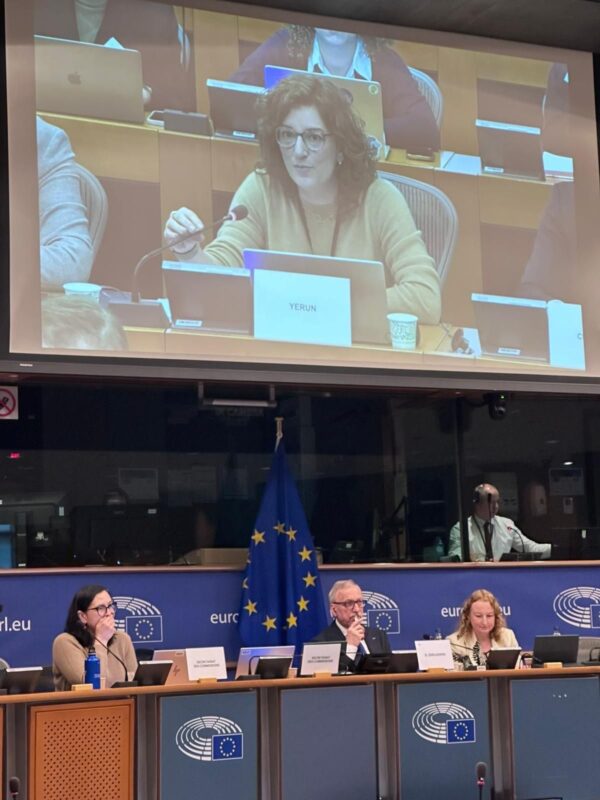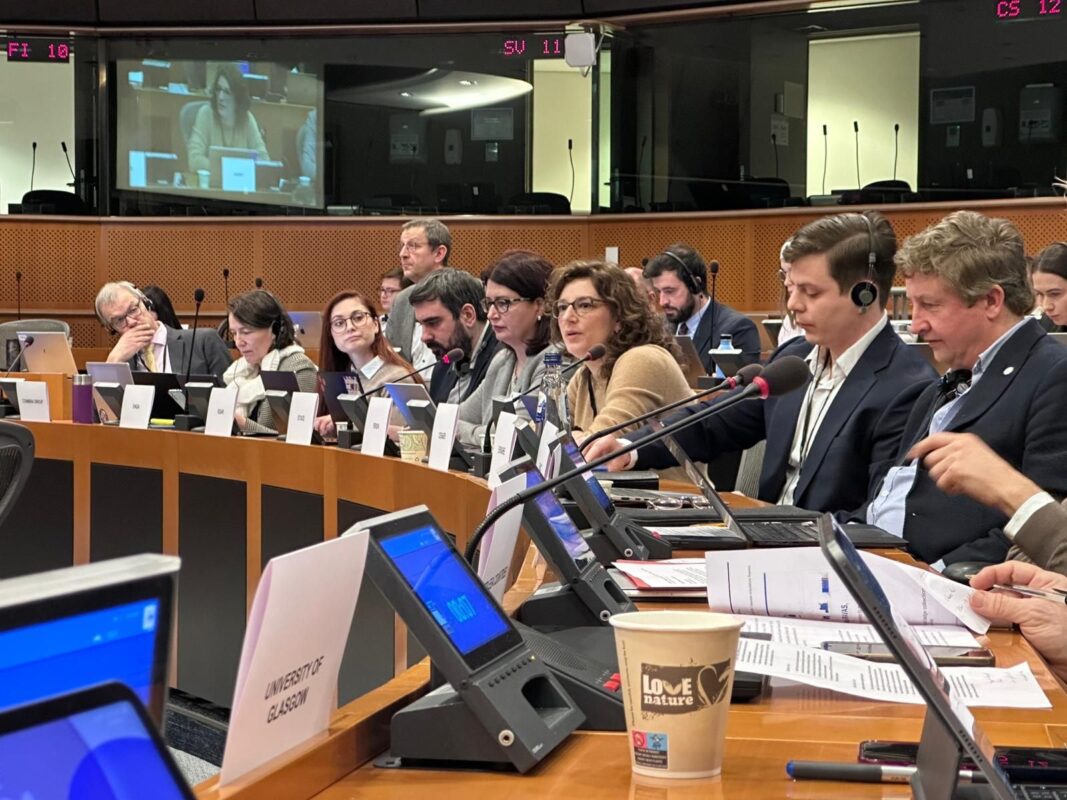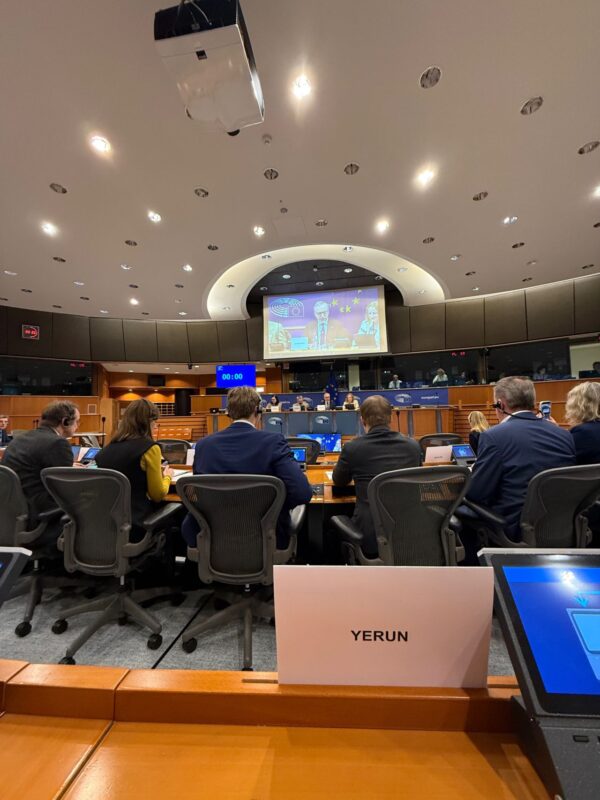
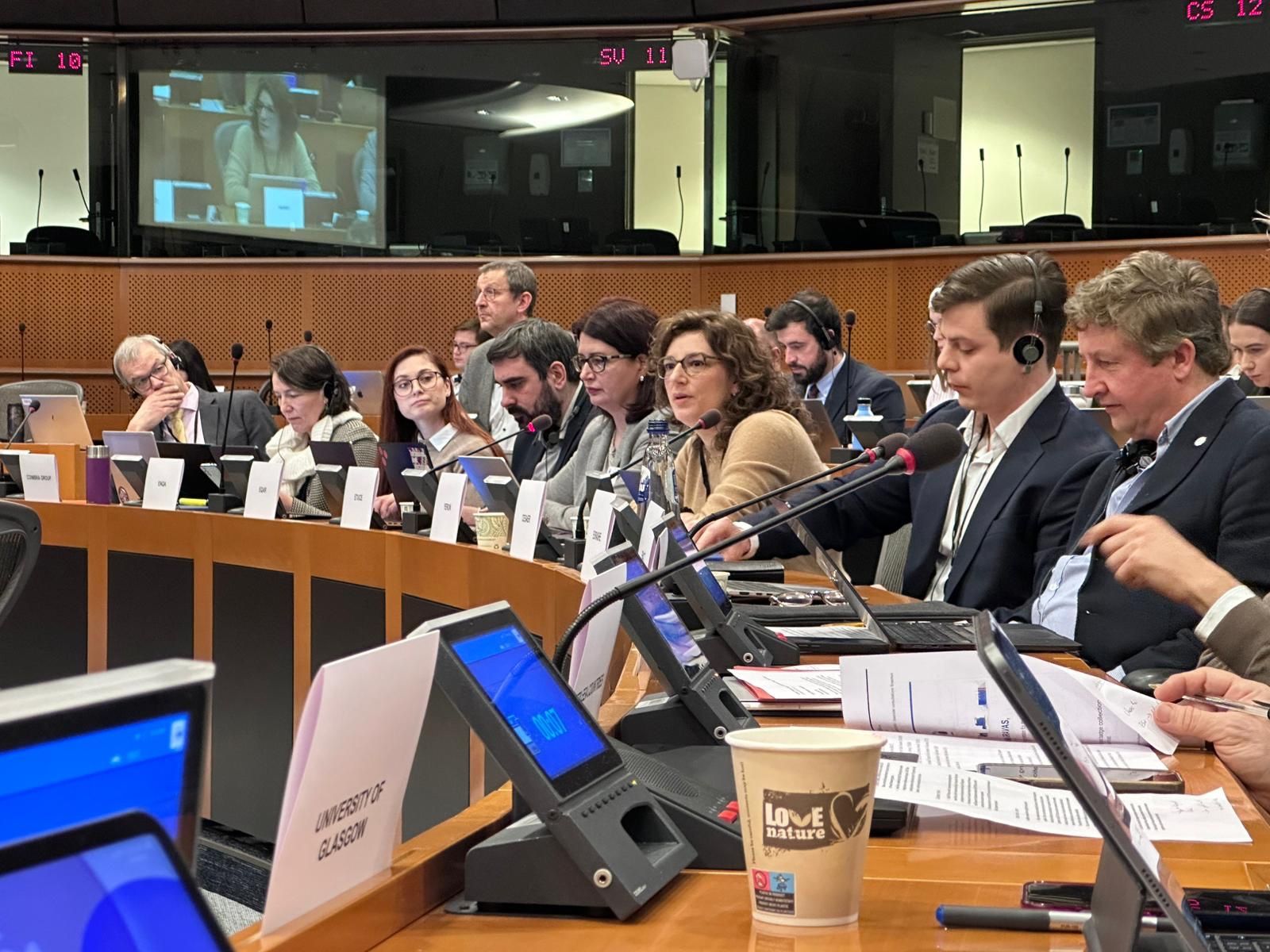
On 28 January, YERUN was invited to the European Parliament in the context of the CULT Committee, following an invitation from MEP Bogdan Zdrojewski. The discussion focused on the establishment of the Erasmus+ Programme for the 2028–2034 period.
Together with other stakeholders, students’ representatives, Member States and associated countries, and national agencies, YERUN shared its proposals and key concerns regarding the future direction of the programme.
During the intervention, YERUN’s Secretary General, Silvia Gomez Recio, outlined the network’s priorities to further strengthen Erasmus+ and ensure that it continues to foster cooperation across borders, disciplines, sectors, and at international level.
You can read the intervention below:
“Chair, Mr Zdrojewski, honourable Members and colleagues, thank you for the invitation.
I speak on behalf of YERUN, the network of young research universities. These are dynamic, research institutions that combine excellent science with student-centred education and strong regional focus. Last year, YERUN marked its 10th anniversary, and we are about to launch our new strategy “Thrive Together”, because our members’ impact depends on cooperation, across borders, disciplines, sectors, and communities.
Erasmus+ has enabled, and continues to enable, the higher education sector to flourish through transnational cooperation. It supports high-quality learning mobility, joint learning experiences, and institutional improvements, making Europe’s universities more open, more globally connected and thus, more competitive. With that spirit in mind, I will focus on two points we believe are crucial as you shape Parliament’s position.
First: Erasmus+ shall remain an education-led programme and not drift into a narrow skills-pipeline instrument.
We fully recognise the importance of addressing skills needs and supporting Europe’s competitiveness. But in the proposal, the framing around skills gaps, talent, and specific sectors is so dominant that higher education risks being positioned primarily as a delivery mechanism for labour-market shortages. This would be a strategic mistake.
Young research universities educate students with a broad, future-proof skillet; advanced and transversal skills, critical thinking, creativity, research literacy, civic competence, and the capacity to adapt. Crucially, we do this through education and mobility, not by reducing education to skills metrics. Through Erasmus+ cooperation, our members are embedding interdisciplinary elements into curricula, building challenge-based learning across borders, and co-developing programmes that expose students to different scientific traditions and societal contexts. That is how Europe builds the talent and innovation capacity it needs, while also strengthening Europe’s cohesion and shared values.
Simply put, skills development should be supported through learning, education, training, and institutional cooperation and mobility, not by reshaping Erasmus+ into a diluted programme. The narrative matters because it drives calls, priorities, and what universities and beneficiaries are incentivised to do.
Second: ambition must be matched with adequate resourcing; flexibility cannot come at the expense of transparency and stability.
I don’t mind being the 20th speaker to repeat that 40bn€ are not enough for the ambitions, objectives and expectations of the proposal. Therefore, I want to reiterate the need to reach 60bn€. Erasmus+ is not a cost to minimise, it is a strategic investment in Europe’s future, with returns that compound over time.
Connected to the funding, we see the proposal’s rationale for flexibility in response to rapidly changing environments and evolving Union priorities. But in reality, institutions need to PLAN multiannual partnerships, recognition pathways, mobility ecosystems, and joint programmes. These require predictable rules and reliable funding. If priorities can shift too easily, higher education and training end up competing with every new political priority.
We therefore ask for a stronger predictability and ensure minimum guarantees that preserve the integrity of higher education mobility and cooperation. We also call on addressing the “silent implementation burden” that continues adding for institutions: scaling long-term initiatives (e.g. European Universities alliances), inclusion measures, and digitalisation and interoperability are welcome, but they demand real institutional capacity: staff time, long-term structures, and sustained digital infrastructure and compliance costs. These cannot be assumed into existence without proportional support.
Finally, the proposal also touches upon plans for simplification. We call on the European Parliament to continue having dialogues with stakeholders to get the evidence and understanding on the value of the simplification measures. The EC has been using more and more lump sum models as a way to reduce reporting admin. Turns out that institutions are required to keep timesheets and time spent on projects anyway by their national agencies for future audit purposes.
We look forward to supporting your work with a written contribution, and we stand ready to help ensure Erasmus+ 2028–2034 remains a programme that universities, and Europe, can truly thrive with.
Finally, this is where YERUN’s perspective is distinct: many young research universities are engines of regional development, supporting local innovation ecosystems, attracting and retaining talent, partnering with SMEs and public services, and strengthening social cohesion. That regional impact feeds directly into European competitiveness. Erasmus in an ecosystem: Many of the challenges Erasmus+ faces today are not “programme problems” in isolation, but ecosystem constraints that directly shape whether mobility and cooperation are feasible in practice. The most visible example is housing: in many university cities, shortages and rising costs are now a decisive barrier for students and staff considering mobility, sometimes even when a grant is available. Similar cross-cutting pressures include transport affordability, administrative and visa bottlenecks for incoming talent, access needs and support services, and the capacity of universities to provide guidance before, during, and after a mobility period. If the next Erasmus+ is to deliver on its ambitions, particularly on inclusion and widening participation, it needs to recognise these realities and design measures that work within this broader ecosystem: enabling solutions such as targeted top-ups or support mechanisms, stronger coordination with local and regional actors where relevant, and proportional institutional support so universities can provide the services and infrastructure that make mobility genuinely accessible.”
Furthermore, at the beginning of the year, YERUN, together with other sectoral networks, published a joint statement arguing that a stronger Europe requires a properly funded Erasmus+ programme, warning that ambition without adequate financial resources will not deliver results.